You took the SAT®, and now the wait begins to receive your SAT® scores. But once you get your scores back, what do they mean? We all know the importance of a high SAT® score, but let's fully understand how the scoring works to motivate you to prepare hard to increase your overall score.
Try the OTC Online Prep for the SAT® Course for FREE!
Claim your free trial and see the OTC Online Prep for the SAT® Course firsthand.
Learn tips and strategies to jump your SAT® score.
Click here for OTC Online Prep for the SAT® Free Trial Course
How is the SAT® scored?
The range for the total SAT® score is 400-1600. Your SAT® score combines two scores with ranges from 200-800: Reading & Writing and Math. Scores are calculated based only on your correct answers. Importantly, you aren’t penalized for incorrect answers, so you should always guess rather than leave a question blank.
Subscores
Each of the sections (Reading & Writing and Math) has multiple subscores to help you better understand your scores. Each of the subscores ranges from 1-15.
Reading subscores: Information and Ideas, Craft and Structure, Expression of Ideas, and Standard English Conventions.
Math subscores: Algebra, Advanced Math, Problem-Solving and Data Analysis, and Geometry and Trigonometry.
Cross-Test Scores
The SAT® also provides two cross-test scores: Analysis in History/Social Studies and Analysis in Science. These scores are calculated on questions across the sections in these subject areas and range from 10-40.
What is the average SAT® score?
According to the College Board, the average SAT® score in 2026 was 1045. While average scores can be a starting point to see how you compare, it’s typically better to compare your scores to the average scores at the schools you want to attend. Check your scores against the college minimums for admission (usually a 1050 at most public universities) and the scores that receive merit scholarships. After all, the goal is to attend college and graduate with minimal debt.
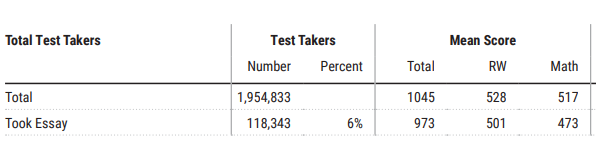
You can also use our OnToCollege Score Converter to see how you compare to other applicants at your target college.
When will you get your SAT® scores?
The College Board typically returns test scores for the SAT® within 2-3 weeks of your test date. For 2026:
| Test Date | Score Release Dates |
| August 22 | September 4 |
| September 12 | September 25 |
| October 3 | October 16 |
| November 7 | November 20 |
| December 5 | December 18 |
What is the SAT® score range?
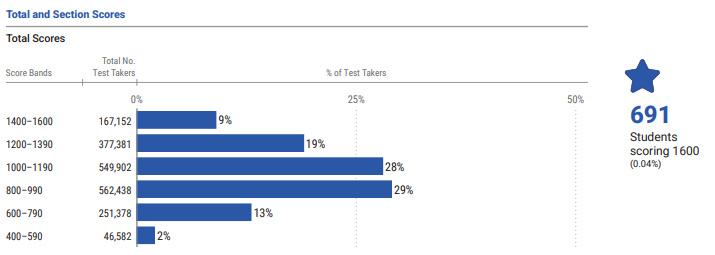
SAT® scores range from 400 to 1600. The SAT® reported the percentage of students who scored in each score range in 2026. The highest percentage of students scored in the range of 800-990, and only 9% of the over two million students who took the test scored in the top range of 1400-1600. Less than 2% scored 400-590.
How do you send scores to colleges?
You can send up to four score reports to colleges for free. Typically, you select schools to receive scores when you register for the test, but you can also add more schools up to nine days after the test date (before you receive your scores). You can send additional score reports for $15 each. SAT® fee waivers allow you to send as many score reports as you wish—for free. If you think you may be eligible for a fee waiver, work with your school counselor to submit the request.
How do you increase your SAT® score?
The right preparation and lots of practice are two ways you can work to increase your SAT® score! Look for SAT® prep with effective strategies and lots of practice! Not all test prep is created equal, so make sure you do your research, read reviews, and look past flashy guarantees.
OTC Online Prep for the SAT® Test is a fun, engaging video course that teaches you strategies for the test and also provides practice materials and detailed solution videos so you can constantly improve and learn from your mistakes! And don’t forget to take the SAT® multiple times—ideally twice during your junior year and twice during the fall of your senior year.
___________________________
Understanding more about your SAT® scores can help show you how you might improve your score. With the right preparation and strategies, you can increase your score and graduate from college with minimal debt! Want to increase your SAT® score? Take a look at OTC Online Prep for the SAT® Test Course or try OTC Online Prep for the SAT® Free Trial Course.